LEED-BDC-v4-v5-Summary-of-Changes - Page 002
Extracted Content
Summary of changes to LEED v5
LEED v5 marks a transformative milestone in the built environment’s alignment with a low-carbon future and has been developed around three central areas of impact: decarbonization, quality of life, and ecological conservation and restoration. Every credit and prerequisite in LEED v5 is connected to the three central areas of impact. The LEED BD+C rating system is for buildings that are new construction or major renovations, and the entire building’s gross floor area must be included in the project.
Additional requirements for LEED Platinum certification have been added which include electrification requirements, minimum thresholds for energy efficiency, renewable energy requirements, and embodied carbon reductions.
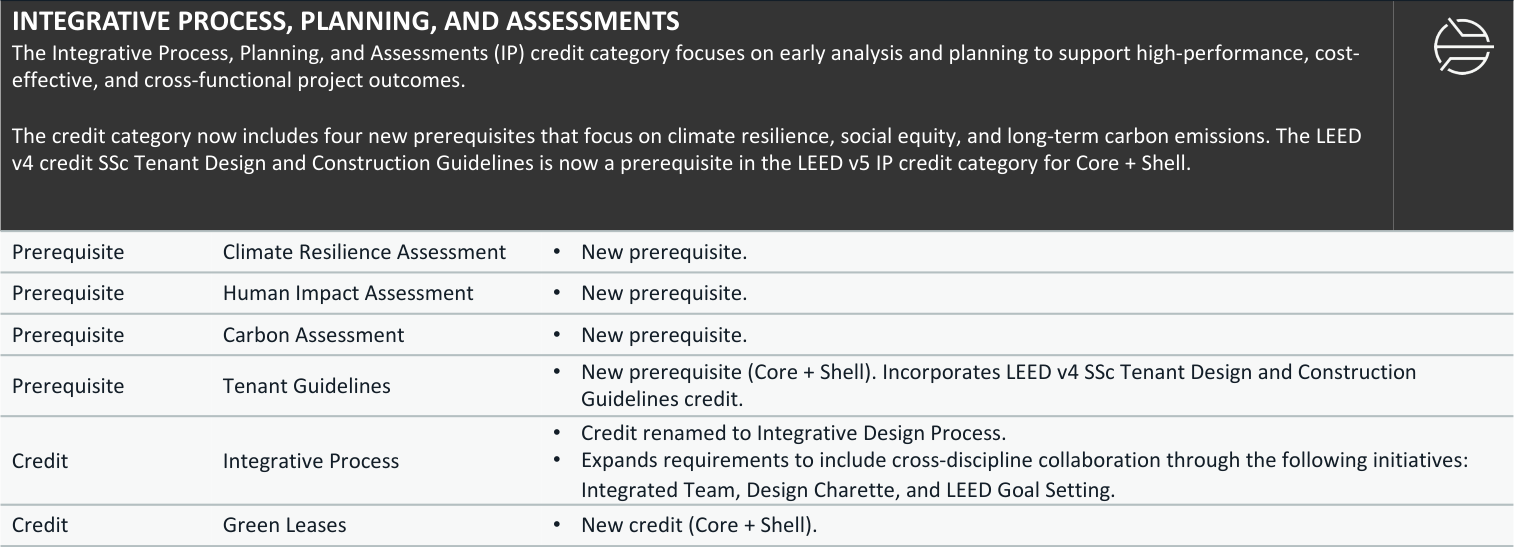
Integrative Process, Planning, and Assessments
The Integrative Process, Planning, and Assessments (IP) credit category focuses on early analysis and planning to support high-performance, cost-effective, and cross-functional project outcomes.
The credit category now includes four new prerequisites that focus on climate resilience, social equity, and long-term carbon emissions. The LEED v4 credit SSc Tenant Design and Construction Guidelines is now a prerequisite in the LEED v5 IP credit category for Core + Shell.
| Prerequisite | Climate Resilience Assessment |
|
| Prerequisite | Human Impact Assessment |
|
| Prerequisite | Carbon Assessment |
|
| Prerequisite | Tenant Guidelines |
|
| Credit | Integrative Process |
|
| Credit | Green Leases |
|
2
U.S. Green Building Council