LEED v5 O+M Rating System_February 2026 - Page 027
Extracted Content
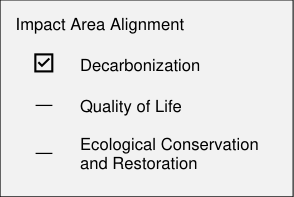
Location and Transportation Credit
ELECTRIC VEHICLES
LTc3
1 point
INTENT
To encourage the use of electric vehicles and infrastructure and help diminish the negative health effects on communities by lowering greenhouse gas emissions and other pollutants emitted from conventionally fueled cars and trucks.
REQUIREMENTS
| Achievement Pathways | Points |
|---|---|
Existing Buildings | 1 |
Electric Vehicle Supply Equipment | 1 |
Install electric vehicle supply equipment (EVSE) meeting the thresholds listed in Table 1. EVSE must meet the following criteria:
-
Provide Level 2 or Level 3 charging capacity per manufacturer’s requirements and the requirements of the National Electrical Code (NFPA 70) .
-
Ensure 208–240 volts or greater for each required space.
-
Comply with the relevant regional or local standard for electrical connectors, such as SAE Surface Vehicle Recommended Practice J1772, SAE Electric Vehicle Conductive Charge Coupler, or IEC 62196 of the International Electrotechnical Commission for projects outside the U.S.
-
Meet the connected functionality criteria for ENERGY STAR-certified EVSE and be capable of responding to time-of-use market signals (e.g., price).
-
At least one EV charging station must be an accessible parking space at least 8 feet (2.5 meters) wide with a 5-foot (1.5-meter) access aisle with charging station accessibility features for use by persons with mobility, ambulatory, and visual limitations.
Table 1. Points for Installed EVSE (Percentage of Total Parking Spaces)
| Commercial Minimum EVSE Parking | Points |
|---|---|
5% or at least two spaces, whichever is greater | 1 |
| Residential Minimum EVSE Parking | Points |
10% or at least five spaces, whichever is greater | 1 |
U.S. Green Building Council LEED v5 Reference Guide for Operations and Maintenance, November 2025 Edition 21