Page 030 - o -_ ed - , ———
Source section: Section 2 - Sustainable Thinking PDF page: 30 Guide page: 23 OCR quality: high (345 words)
OCR Text
o -_ ed - , ——— al ~~. ~~. —_»> 2 . =x a ES = are _* 5 ae = . ms = ~ \ =~ - Ye ; » — e = a a J ’ Png eS, teak ay r=. ir a DA |
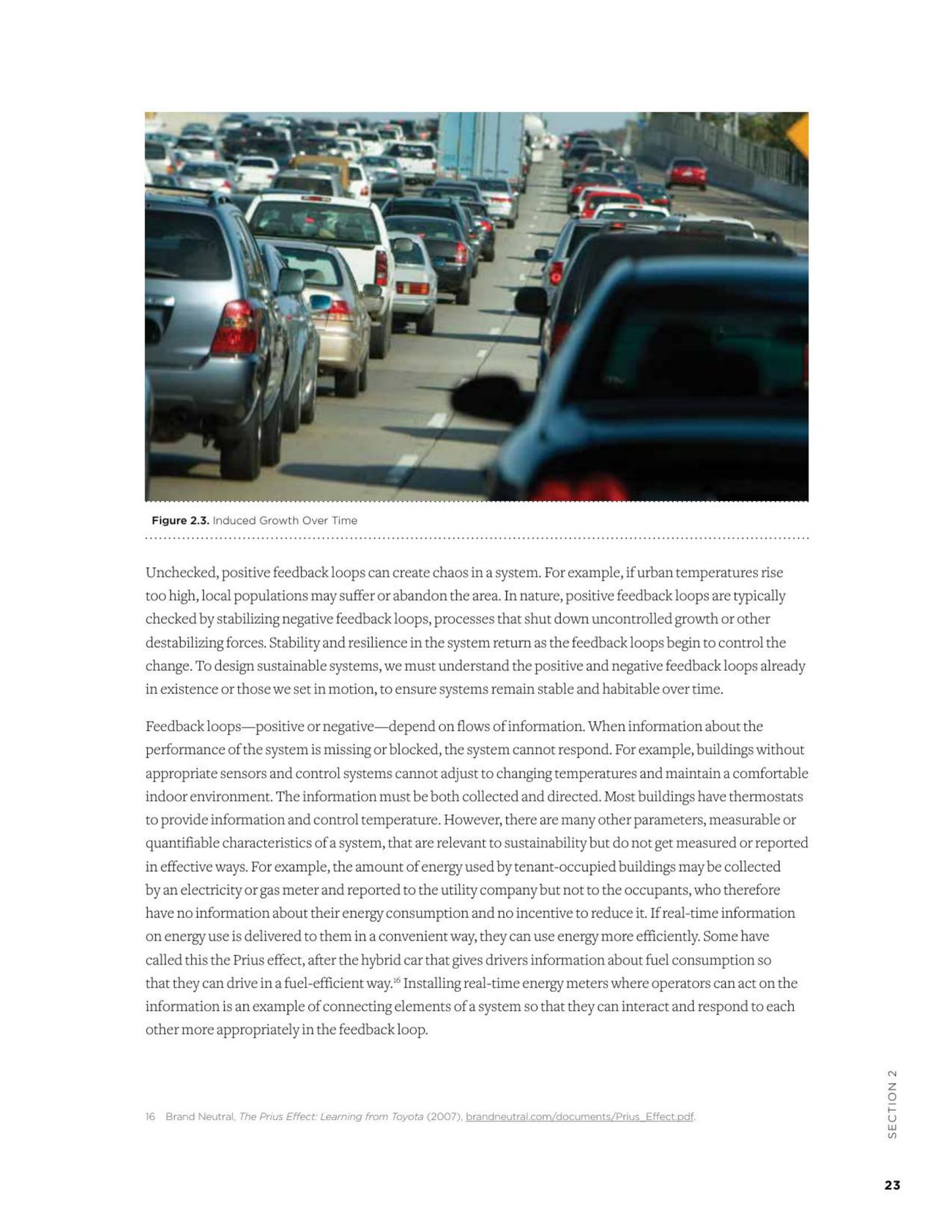
Figure 2.3. Induced Growth Over Time
Unchecked, positive feedback loops can create chaos in a system. For example, if urban temperatures rise
too high, local populations may suffer or abandon the area. In nature, positive feedback loops are typically
checked by stabilizing negative feedback loops, processes that shut down uncontrolled growth or other
destabilizing forces. Stability and resilience in the system return as the feedback loops begin to control the
change. To design sustainable systems, we must understand the positive and negative feedback loops already
in existence or those we set in motion, to ensure systems remain stable and habitable over time.
Feedback loops—positive or negative—depend on flows of information. When information about the
performance of the system is missing or blocked, the system cannot respond. For example, buildings without
appropriate sensors and control systems cannot adjust to changing temperatures and maintain a comfortable
indoor environment. The information must be both collected and directed. Most buildings have thermostats
to provide information and control temperature. However, there are many other parameters, measurable or
quantifiable characteristics of a system, that are relevant to sustainability but do not get measured or reported
in effective ways. For example, the amount of energy used by tenant-occupied buildings may be collected
by an electricity or gas meter and reported to the utility company but not to the occupants, who therefore
have no information about their energy consumption and no incentive to reduce it. If real-time information
on energy use is delivered to them in a convenient way, they can use energy more efficiently. Some have
called this the Prius effect, after the hybrid car that gives drivers information about fuel consumption so
that they can drive ina fuel-efficient way.” Installing real-time energy meters where operators can act on the
information is an example of connecting elements of a system so that they can interact and respond to each
other more appropriately in the feedback loop. “ r4 2 7
16 Brand Neutral, The Prius Effect: Learning from Toyota (201 brandneutral.com/do ents/Prius_Effect.pdf oO w wn 23