Page 067 - c =
Source section: Section 4 - Green Building Core Concepts and Application Strategies PDF page: 67 Guide page: 60 OCR quality: medium (198 words)
OCR Text
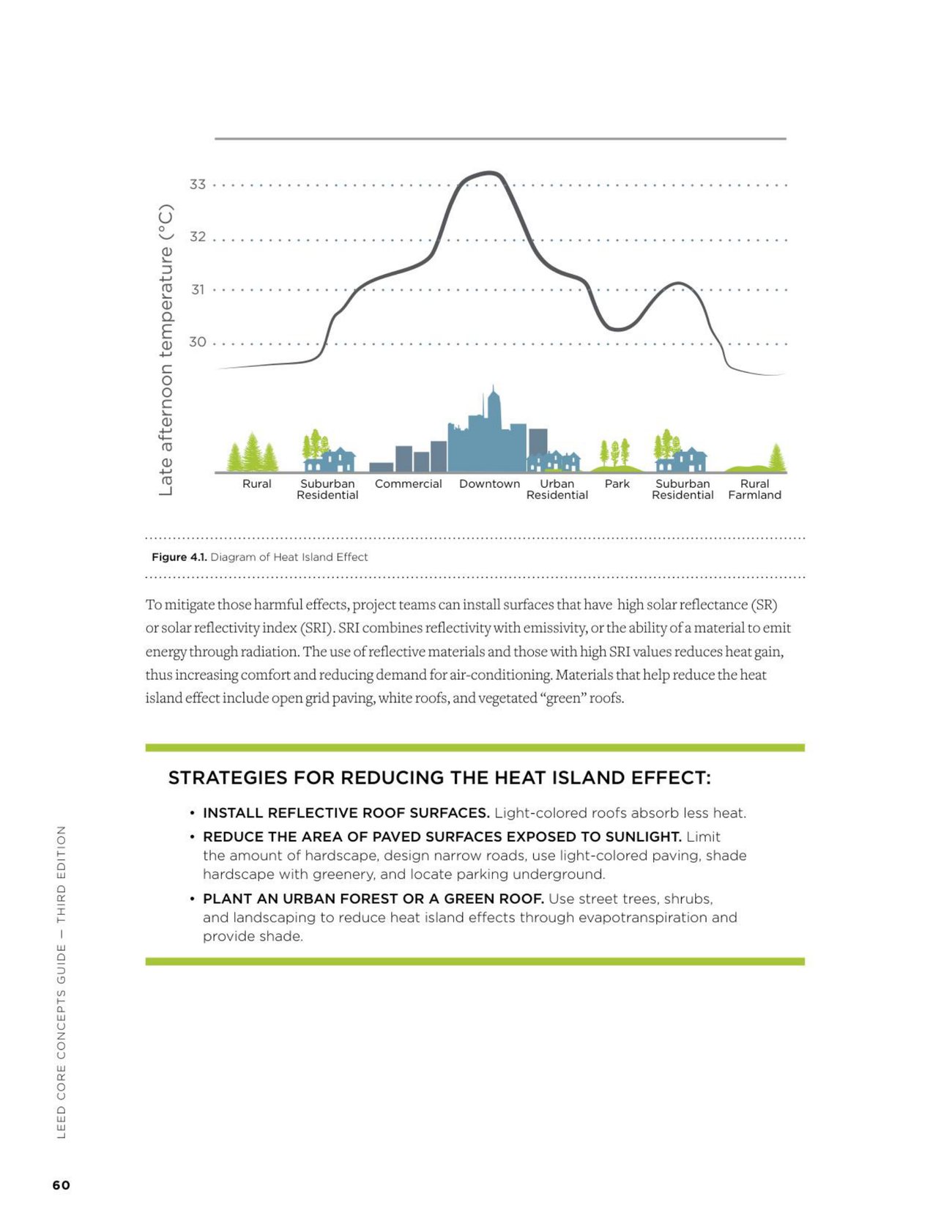
Cire % o —_ = | rar) o Qa 5 Oink TM, MCAT CTT oe HAI OG RETA 8G Kite ae MeN Ge mR a} c = ie) ie) Cc _ oO frm © a Ss Rural Suburban Commercial Downtown _ Urban Park Suburban Rural Residential Residential Residential Farmland Figure 4.1. Diagram of Heat Island Effect To mitigate those harmful effects, project teams can install surfaces that have high solar reflectance (SR) or solar reflectivity index (SRI). SRI combines reflectivity with emissivity, or the ability of a material to emit energy through radiation. The use of reflective materials and those with high SRI values reduces heat gain, thus increasing comfort and reducing demand for air-conditioning. Materials that help reduce the heat island effect include open grid paving, white roofs, and vegetated “green” roofs. SE STRATEGIES FOR REDUCING THE HEAT ISLAND EFFECT:
- INSTALL REFLECTIVE ROOF SURFACES. Light-colored roofs absorb less heat. g * REDUCE THE AREA OF PAVED SURFACES EXPOSED TO SUNLIGHT. Limit E the amount of hardscape, design narrow roads, use light-colored paving, shade a hardscape with greenery, and locate parking underground. re * PLANT AN URBAN FOREST OR A GREEN ROOF. Use street trees, shrubs, rad and landscaping to reduce heat island effects through evapotranspiration and | provide shade. a ————————————————————————————————————————— SaaS! 2 oO w ial a Ww oO Zz fo} oO Ww a fe} oO a w Ww =| 60