855773520-LEED-v5-ID-C-Reference-Guide-Launch-Edition-1 - Page 060
Extracted Content
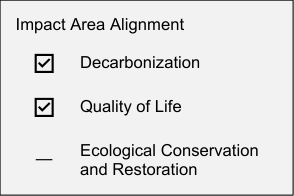
Location and Transportation Credit
TRANSPORTATION DEMAND MANAGEMENT
LTc2
1–4 points
INTENT
To reduce pollution and land development effects from automobile use through encouraging alternative transportation networks. To promote more livable and healthy communities through reduced vehicle miles traveled (VMT ) and reduced associated emissions.
REQUIREMENTS
| Achievement pathways | Points |
|---|---|
Commercial Interiors | 1–4 |
Transportation Demand Assessment | |
AND | |
Option 1. Parking | 1–3 |
Path 1. Reduce Parking | 1–3 |
AND/OR | |
Path 2. Unbundle Parking | 2 |
AND/OR | |
Option 2. Active Travel Facilities | 1–3 |
Path 1. Base Building certified with LEED BD+C | 1–2 |
OR | |
Path 2. Active Travel Facilities in Base Building | 1–2 |
AND/OR | |
Option 3. Compliant Base Building | 1 |
Path 1. Bicycle Network and Storage | 1 |
AND/OR | |
Path 2. Base Building Shower and Changing Facilities | 1 |
AND/OR | |
Path 3. Tenant Space Shower and Changing Facilities | 1 |
AND/OR | |
Path 4. Bicycle Maintenance | 1 |
Transportation Demand Assessment
Assess the number of VMT and carbon emissions associated with regular building occupants’ travel to and from the project building as outlined below:
-
Estimate the annual VMT .
-
Estimate annual baseline case for carbon emissions.
-
Assess low-carbon transportation options.
U.S. Green Building Council LEED v5 Reference Guide for Interior Design and Construction, April 2025 Launch Edition 49