855773520-LEED-v5-ID-C-Reference-Guide-Launch-Edition-1 - Page 153
Extracted Content
Energy and Atmosphere Credit
ELECTRIFICATION
EAc1
1–5 points
INTENT
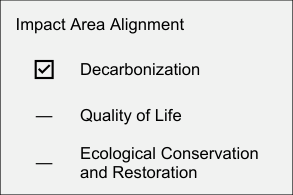
To encourage buildings to be designed so that they do not depend on burning fuel on-site, leading to better indoor and outdoor air quality and to low-carbon operations as the grid decarbonizes.
REQUIREMENTS
| Achievement pathways | Points |
|---|---|
Commercial Interiors | 1–5 |
Option 1. No On-Site Combustion—Base Building and Tenant Systems | 5 |
OR | |
Option 2. No On-Site Combustion Except at Low Temperatures—Base Building and Tenant Systems | 1–5 |
Path 1. Space Heating | 2 |
AND/OR | |
Path 2. Service Water Heating | 1 |
AND/OR | |
Path 3. Cooking and Other Process Loads | 1–2 |
Option 3. No On-Site Combustion, Limited Scope | 1–3 |
OR | |
Option 4. Base Building Documentation and Tenant Compliance | 5 |
Option 1. No On-Site Combustion — Base Building and Tenant Systems (5 points)
Design and operate the project from start-up with no on-site combustion except for emergency support systems.
The combined weighted average equipment efficiency for space heating and service water heating (SWH) must be at least 1.8 Coefficient of Performance (COP) for initial build-out construction or at least 1.2 COP for alterations.
The following equipment may be excluded from the COP determination:
-
Space heating equipment in climate zones 0–2
-
Supplemental heating equipment designed only for operation at low temperatures
U.S. Green Building Council LEED v5 Reference Guide for Interior Design and Construction, April 2025 Launch Edition 142