ASHRAE-90.1-2022- - Page 386
Extracted Content
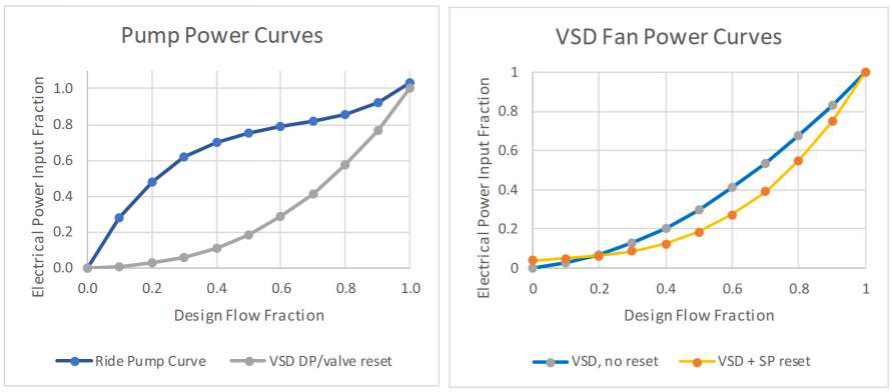
Table L4.2.3-1 Fan and Pump Power Curve Coefficients
| Equation Term | Fan Power Coefficients | Col3 | Pump Power Coefficients | Col5 |
|---|---|---|---|---|
| Equation Term | VSD (no Static Pressure Reset) | VSD + Static Pressure Reset | Ride Pump Curve | VSD + Differential Pressure/Valve Reset |
| b | 0.0013 | 0.0408 | 0 | 0 |
| x | 0.147 | 0.088 | 3.2485 | 0.0205 |
| _x_2 | 0.9506 | –0.0729 | –4.7443 | 0.4101 |
| _x_3 | –0.0998 | 0.9437 | 2.5295 | 0.5753 |
Figure L4.2.3-1 Fan and pump power performance as a function of design water flow or airflow.
L4.1.7 Elevators. Elevators shall not be modeled. L4.1.8 Service Water-Heating Equipment. Service water heating shall not be modeled. L4.1.9 On-site Renewable Energy Systems. On-site renewable energy systems shall not be modeled.
L4.2 Simulation of the Proposed Design (HVAC). The proposed design HVAC systems shall be configured and analyzed as specified in this section.
L4.2.1 HVAC Equipment. The simulation program shall analyze the control parameters that meet the mandatory requirements of Section 6.4 and the parameters provided by the user or specified as fixed in Section L2.2.3 as applicable for each HVAC system included in the proposed design .
L4.2.2 Supported HVAC Systems. The HVAC systems included in the proposed design and the TSPR reference building design shall be supported by the simulation program . HVAC systems permitted are limited to those shown in Table L.1.1.1. The simulation program shall support multiple blocks being served by one central system .
L4.2.3 Proposed Building HVAC System Simulation. The HVAC systems shall be modeled as in the proposed design with clarifications and simplifications as described in Table L2.2.3 and the following rules:
a. System parameters not described in Table L2.2.3 and the following sections shall be simulated to meet
the minimum requirements of Section 6.4. b. Where multiple system components serve a block, average values weighed by the appropriate metric as
described in Section L2.2.3.1 shall be used. c. Heat loss from ducts and pipes shall not be modeled. d. The simulation program shall model part-load HVAC equipment performance using either
- full-load efficiency (adjusted for fan power input that is modeled separately) and typical part-load performance adjustments for the proposed equipment ;
- part-load adjustments based on input of both full-load and part-load metrics, or
- equipment -specific adjustments based on performance data provided by the equipment manufacturer for the proposed equipment .
384 ANSI/ASHRAE/IES Standard 90.1-2022 (I-P)