ASHRAE-Standard-55 - Page 053
Extracted Content
Table I-1 Expected Percent Dissatisfied Due to Sources of Local Discomfort
Vertical Air Temperature
Draft
Difference Warm or Cool Floors Radiant Asymmetry
<20% <5% <10% <5%
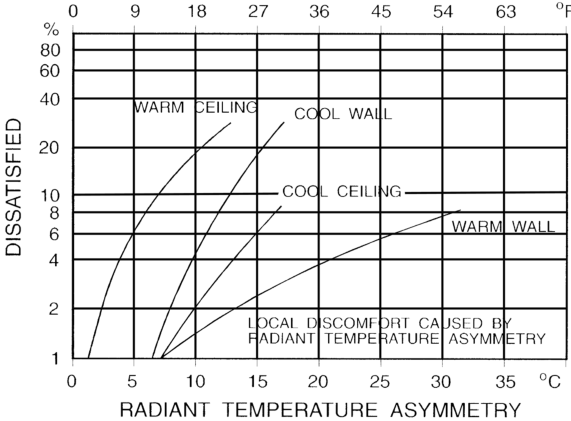
Figure I-1 Local thermal discomfort caused by radiant asymmetry.
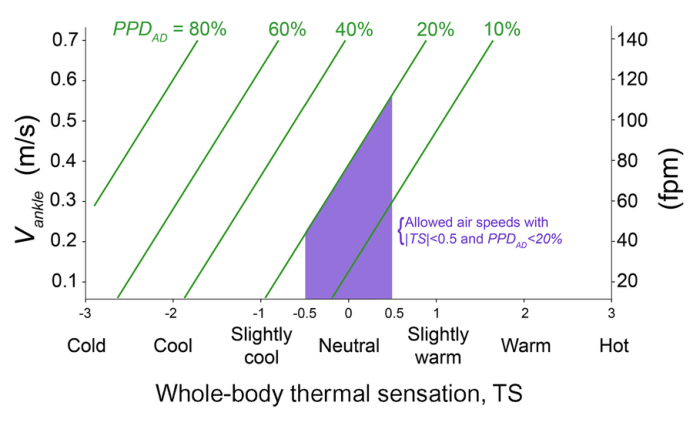
Figure I-2 Air speed limits at 0.1 m (4 in.) above the floor as a function of whole-body thermal sensation and the predicted percentage of dissatisfied with ankle draft (PPD AD ).
The maximum air speed at the ankle level is deduced from the predicted percentage of dissatisfied with ankle draft PPD AD . PPD AD is an index that establishes a quantitative prediction of the percentage of thermally dissatisfied people with the draft at ankle level. PPD AD is calculated according to the following formula or is deduced from Figure I-2:
PPD AD
PPD AD
= --------------------------------------------------------------------------------------------exp - 2.58 + 3.05 Vankle - 1.06TS - 1 + exp - 2.58 + 3.05 Vankle - 1.06TS
= -----------------------------------------------------------------------------------------------exp - 2.58 + 0.015 Vankle - 1.06TS - 1 + exp - 2.58 + 0.105 Vankle - 1.06TS
, ( Vankle in m/s)
, ( Vankle in fpm)
ANSI/ASHRAE Standard 55-2023 51